

How to design an estate agent website that wins clients
TL;DR:
- Outdated, slow, and non-responsive websites cause estate agencies to lose potential clients.
- Modern websites should feature responsive design, local branding, high-quality images, and strong CTAs.
- Continuous updates, mobile-first approach, and clear analytics improve lead generation and market competitiveness.
If your estate agency’s website is quietly losing you business, you’re not alone. Across the South East of England, many agents are sitting on outdated, slow-loading sites that look tired on mobile and fail to generate meaningful enquiries. Property buyers and sellers today make snap judgements online before they ever pick up the phone, and a website that doesn’t inspire confidence is simply sending those prospects straight to your competitors. This guide walks you through everything you need to create a modern, high-performing estate agent website, from planning and design to launch and ongoing improvement.
Table of Contents
- What makes a great estate agent website?
- Planning your estate agent website design
- Step-by-step guide to designing your site
- Common mistakes and how to avoid them
- Measuring success and continuous improvement
- Our take: What most estate agent websites get wrong
- Ready to elevate your estate agency’s website?
- Frequently asked questions
Key Takeaways
| Point | Details |
|---|---|
| Essential features | Modern estate agent websites require mobile optimisation, property search, and strong visual branding. |
| Thorough planning | Defining goals and requirements before design helps avoid costly mistakes. |
| Step-by-step process | Following a structured design approach ensures professional, effective results. |
| Avoid common errors | Sidestep pitfalls like unclear navigation or slow speed for better client experience. |
| Continuous improvement | Regular updates and performance checks keep your website ahead of local competition. |
What makes a great estate agent website?
Now that you’ve seen the potential impact, let’s explore what truly sets a successful estate agent website apart. The property market is competitive at every level, but particularly across Sussex, Kent, Surrey, and the wider South East, where buyers often have high expectations and plenty of choice. Your website needs to work hard from the very first impression.
Top website features for estate agencies consistently include a fast and intuitive property search, stunning photography, and unmissable contact options. These are not optional extras; they are the foundations of trust.
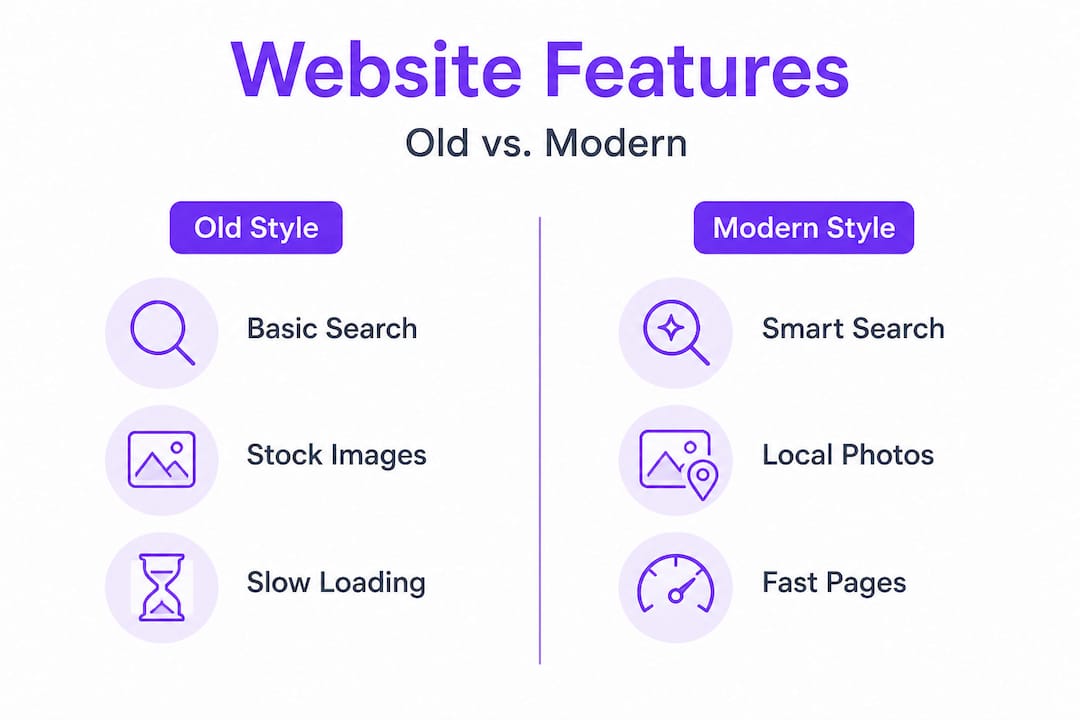
Here’s a quick comparison between what many older estate agent websites offer versus what modern, high-performing sites deliver:
| Feature | Common older websites | Modern estate agent websites |
|---|---|---|
| Property search | Basic keyword search | Filtered search by price, type, location |
| Photography | Small, low-resolution images | Full-screen, professional photography |
| Mobile experience | Desktop layout on mobile | Truly responsive, mobile-first design |
| Contact options | Email address only | Live chat, click-to-call, enquiry forms |
| Branding | Generic template look | Distinct local identity and personality |
| Content | Static listing descriptions | Regular blog posts, local guides, market news |
The difference is stark. Buyers browsing from a phone in their lunch break will simply abandon a site that forces them to pinch and zoom. Sellers researching agents expect a professional first impression that reflects the quality of service they’ll receive.
Features that are proven to generate more leads include:
- Property valuation tools that encourage sellers to register their details
- Saved search and alert functionality so buyers return to your site regularly
- Client testimonials and reviews displayed prominently to build credibility
- Local area guides that position your agency as the go-to expert for the area
- Clear, prominent calls to action on every page, not just the homepage
- Social proof elements such as recent sales, awards, or membership logos
Pro Tip: Design your website for mobile users first, then scale up for desktop. Over half of all property searches in the UK now begin on a smartphone, so a mobile-first approach directly increases the number of enquiries you receive.
Planning your estate agent website design
Understanding your feature set is only half the battle. Solid preparation is key to a smooth design journey. Before a single pixel is placed, you need clarity on what your website is supposed to achieve and who it is supposed to serve.
Start by defining your goals. Are you primarily trying to attract more vendor instructions? Do you want to grow your lettings portfolio? Are you targeting first-time buyers in a particular town, or higher-value properties along the coast? Each of these goals will shape different design decisions, different content, and different calls to action.
Content ideas for estate agents can help you identify what your audience actually wants to read and engage with, which in turn feeds directly into what pages and features your site needs to include.
Use a simple requirements tracking table during your planning phase:
| Area | Requirement | Priority | Notes |
|---|---|---|---|
| Property listings | Integration with Rightmove/Zoopla feeds | High | Must be real-time |
| Branding | Logo, colour palette, typography | High | Source from agency brand guidelines |
| Content pages | Area guides for local towns | Medium | Prioritise top five areas |
| Lead generation | Instant online valuation tool | High | Link to CRM |
| Blog | Monthly market updates | Medium | Assign to team member |
| Technical | SSL certificate, GDPR compliance | High | Legal requirement |
A structured approach like this stops important decisions from falling through the cracks and keeps everyone aligned from the start.
For effective competitor analysis, follow these steps:
- Identify the top five estate agency websites in your specific area.
- Note which features they offer and how their navigation is structured.
- Record what kind of content they publish and how regularly they update it.
- Test each site on a mobile device and note any frustrations.
- List one thing each competitor does well, and one clear gap you could fill.
This process often surfaces real opportunities. You might find that no local agent publishes detailed neighbourhood guides, or that every competitor’s contact page is difficult to find. Those are your advantages waiting to be claimed.
Pro Tip: Involve your whole team in brainstorming your unique selling points. Your negotiators and property managers speak to clients every day; they know exactly what questions buyers and sellers ask most, and those questions should become the content of your website.
Step-by-step guide to designing your site
With a clear plan in hand, it’s time to move from vision to implementation. Here’s a step-by-step method to make it real.
Mastering the development process from the outset will save you significant time and prevent costly revisions later. Many agents jump straight to choosing colours and fonts, skipping the structural thinking that makes a site genuinely easy to use.
Follow these stages in order:
- Wireframing. Sketch out the layout of your key pages before any design work begins. Focus on where the search bar sits, how listings are displayed, and where calls to action appear. Simple sketches or free tools like Figma work well at this stage.
- Choosing a platform. WordPress remains the most flexible and widely supported option for estate agent websites, with plenty of property-specific plugins available. Bespoke builds offer even greater control and can be integrated with your CRM and property management software.
- Brand adaptation. Your website should feel like an extension of your agency’s physical presence. Use your existing colour palette, fonts, and tone of voice consistently throughout. Inconsistency erodes trust.
- Populating property listings. Set up feeds from Rightmove or Zoopla so listings update automatically. Manually curated listings look great but quickly become out of date, which frustrates visitors.
- Adding supporting content. Write area guides, a clear “Why choose us” page, staff profiles with photographs, and a regularly updated blog. This content builds trust and improves your search rankings.
- Integrating live chat. Tools like Tidio or LiveChat allow visitors to ask quick questions without committing to a phone call. This lowers the barrier to engagement significantly.
- Testing before launch. Test on multiple devices and browsers. Check every form, every link, and every listing page. Ask someone unfamiliar with the site to complete a specific task, such as booking a valuation, and note any difficulties they encounter.
Mobile-first design tips are particularly relevant for estate agents in the South East, where buyers are often browsing during commutes or weekend property viewings.
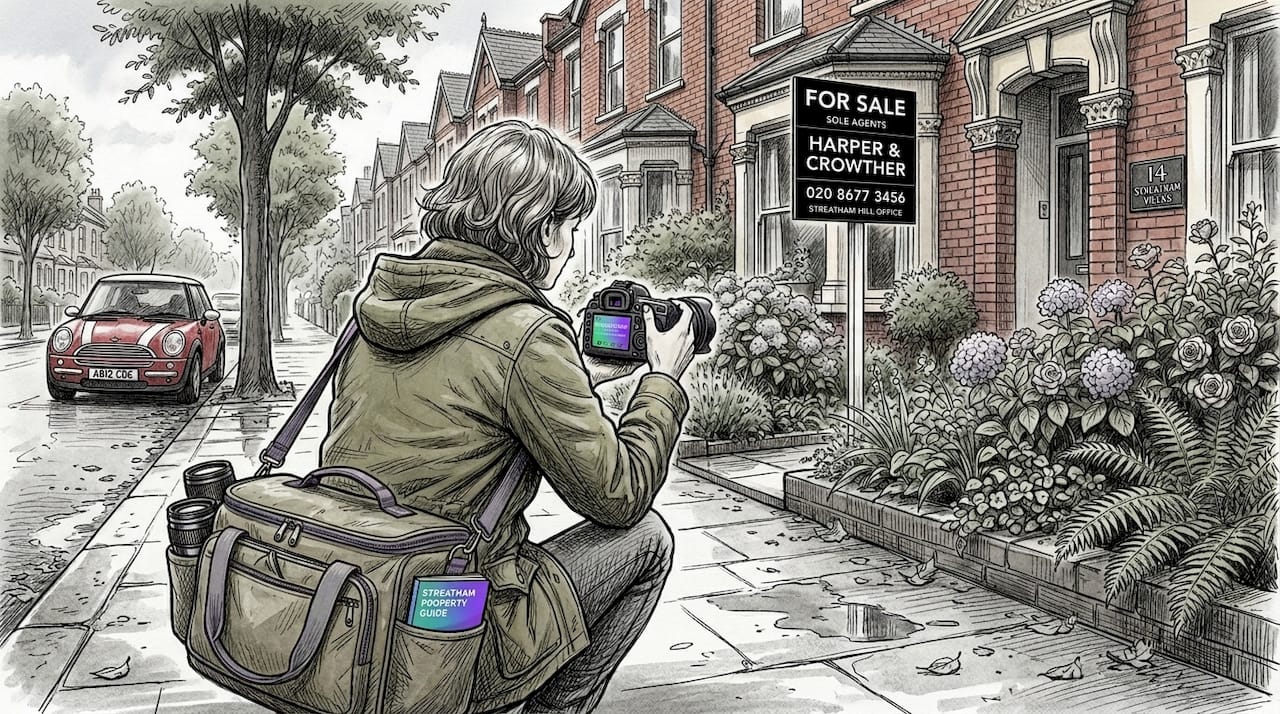
Pro Tip: Use photography that reflects your specific local area. Images of recognisable Sussex landmarks, local high streets, or countryside views immediately signal to visitors that you genuinely know and care about the communities you serve. This builds far more trust than stock photos.
If any of these stages feel outside your comfort zone, bringing in a professional web design team at the right moment can save weeks of frustration and produce a significantly better result.
Common mistakes and how to avoid them
Even the best plans can fall prey to setbacks. Let’s look at how you can sidestep common pitfalls and keep your project on course.
The most frequent problems we see on estate agent websites include:
- Cluttered or unclear navigation that makes it hard for visitors to find what they need within seconds
- Low-quality property photography that makes even lovely homes look unappealing and reduces enquiry rates
- Slow page loading times caused by unoptimised images or poor hosting, which increases bounce rates and damages SEO
- Poor mobile experience where buttons are too small to tap, text is too tiny to read, or forms are difficult to complete
- No clear calls to action leaving visitors unsure what to do next after browsing listings
- Infrequent updates that leave blog posts from two years ago sitting at the top of the news section
The website redesign benefits for estate agencies that address these issues include measurable improvements in enquiry volumes, time on site, and search visibility. These are not abstract improvements; they directly affect how many valuations you book each month.
“A strong brand identity, maintained consistently across your website and all marketing materials, is one of the most powerful ways an estate agent can stand out. Clients choose agents they trust, and trust is built through consistency, credibility, and a polished online presence. Never let your website become stale.”
Regular maintenance is not glamorous, but it is essential. Plan to review your site every quarter at a minimum, checking for broken links, outdated listings, expired staff profiles, and any pages that load slowly. Good web hosting advice is also worth taking seriously; the cheapest shared hosting plans often cause reliability issues that silently cost you business.
Measuring success and continuous improvement
Once you’re live, it’s all about momentum. Here’s how to measure performance and keep evolving your web presence.
A new website is not a one-off project; it is a business asset that needs attention and investment over time. Setting up the right measurements from the start allows you to make evidence-based decisions rather than guessing what’s working. Use website maintenance strategies as part of your regular business rhythm, not just an occasional afterthought.
Key performance indicators worth tracking every month include:
- Total site visitors and how that number trends over time
- Number of listing enquiries submitted through the website each month
- New client registrations from your online valuation tool or contact forms
- Property sales or lettings where the client first found you through the website
- Bounce rate on your key landing pages, which tells you whether visitors are engaging or leaving immediately
- Average time on site across all devices, particularly mobile
Gathering feedback is just as valuable as reading analytics. Ask new clients directly: “How did you find us, and what did you think of our website?” Their answers will often reveal specific pages or features that are working brilliantly, and others that confused or frustrated them.
Market conditions in the South East shift regularly. Interest rate changes, new housing developments, and seasonal patterns all affect what buyers and sellers are searching for online. Adapting your content to reflect current conditions, whether that means publishing a guide to buying in a rising market or showcasing new-build properties in a growing town, keeps your site relevant and positions your agency as genuinely knowledgeable.
Continuous testing, from A/B testing different homepage headlines to trialling a new enquiry form layout, compounds over time into meaningful improvements in lead generation. The agencies that invest consistently in their websites outperform those that launch and leave.
Our take: What most estate agent websites get wrong
Having established the technical and practical sides, let’s step back and take a fresh look at the prevailing approach most estate agencies take online, because honestly, it falls short more often than it should.
The most common mistake we see is over-reliance on templates. A template might look clean and professional at first glance, but it rarely captures what makes an individual agency genuinely different from the one down the road. When every agency in a town is running a variation of the same layout with similar colours and identical page structures, none of them stand out. Buyers notice this, even if they can’t articulate why.
Local imagery is chronically underused. We work with estate agents across East Sussex and the wider South East, and the ones who showcase their specific towns, their communities, and their people consistently attract more engagement. A photograph of your team at a local event, or a beautifully shot image of a recognisable local landmark, does something that a stock photo simply cannot: it proves you belong here.
Perhaps most importantly, many agencies treat their website as a one-time expense rather than an ongoing investment. A website that was excellent in 2022 is likely looking tired in 2026, and the property market has moved on. Digital marketing insights consistently show that agencies investing in regular content, design updates, and technical improvements generate more leads over the long term than those who launch once and hope for the best.
Our honest view: the agencies winning the most instructions online are not necessarily the biggest or the most established. They are the ones who have committed to treating their website as a living, evolving part of their business.
Ready to elevate your estate agency’s website?
Working with a web design team who truly understands the property market and the South East landscape makes a real difference to what you achieve online.
At MB Web, we have spent decades working with local and national businesses, and we bring that experience directly to estate agents who want a website that genuinely performs. Whether you’re starting from scratch or refreshing an existing site, our professional web design and website development services are built around your goals, your market, and your clients. We’d love to have an honest conversation about what’s possible for your agency. Get in touch and let’s talk!
Frequently asked questions
How long does it take to design an estate agent website?
Typically, creating a professional estate agent website takes 6 to 12 weeks from planning to launch if you follow a clear, structured process and have your content and branding assets ready from the start.
What features are essential for an estate agent website?
Key features include a property search tool, mobile optimisation, high-quality photography, prominent client testimonials, and easy-to-find contact options on every page.
How can I ensure good SEO for my property website?
Use keyword-rich local content, structured property descriptions, and SEO strategies for estate agents alongside regular updates to improve your visibility in local search results.
Why is mobile-first design important for estate agents?
Most property searches begin on a mobile device, so mobile-first design directly improves lead conversion rates and ensures clients have a smooth, frustration-free experience from the very first click.
How often should I update my estate agency website?
Review and update your website at least quarterly, adding fresh content for estate agents such as new listings, market updates, and area guides to keep visitors returning and search engines ranking your pages.
Recommended
- Why Responsive Websites Matter for Estate Agents
- Why Mobile-First Web Design Matters for Estate Agents
- Master the website development process for estate agents
- Estate agents & Property Management Web Design | MB Web
- AI SEO for Real Estate Agents in Canada — Locally Visible
- Projektwebsite erstellen: 3x mehr Conversions im Immobilienmarketing